8 Signs You Need a Full Vehicle Wrap in Tampa
Faded, sun-damaged paint is the most common reason Tampa drivers consider a full vehicle wrap. Years of Florida UV dulls factory paint until waxing stops helping. Prime 3 Wraps sees this every week.
Published
Part of our Full Vehicle Wraps service.
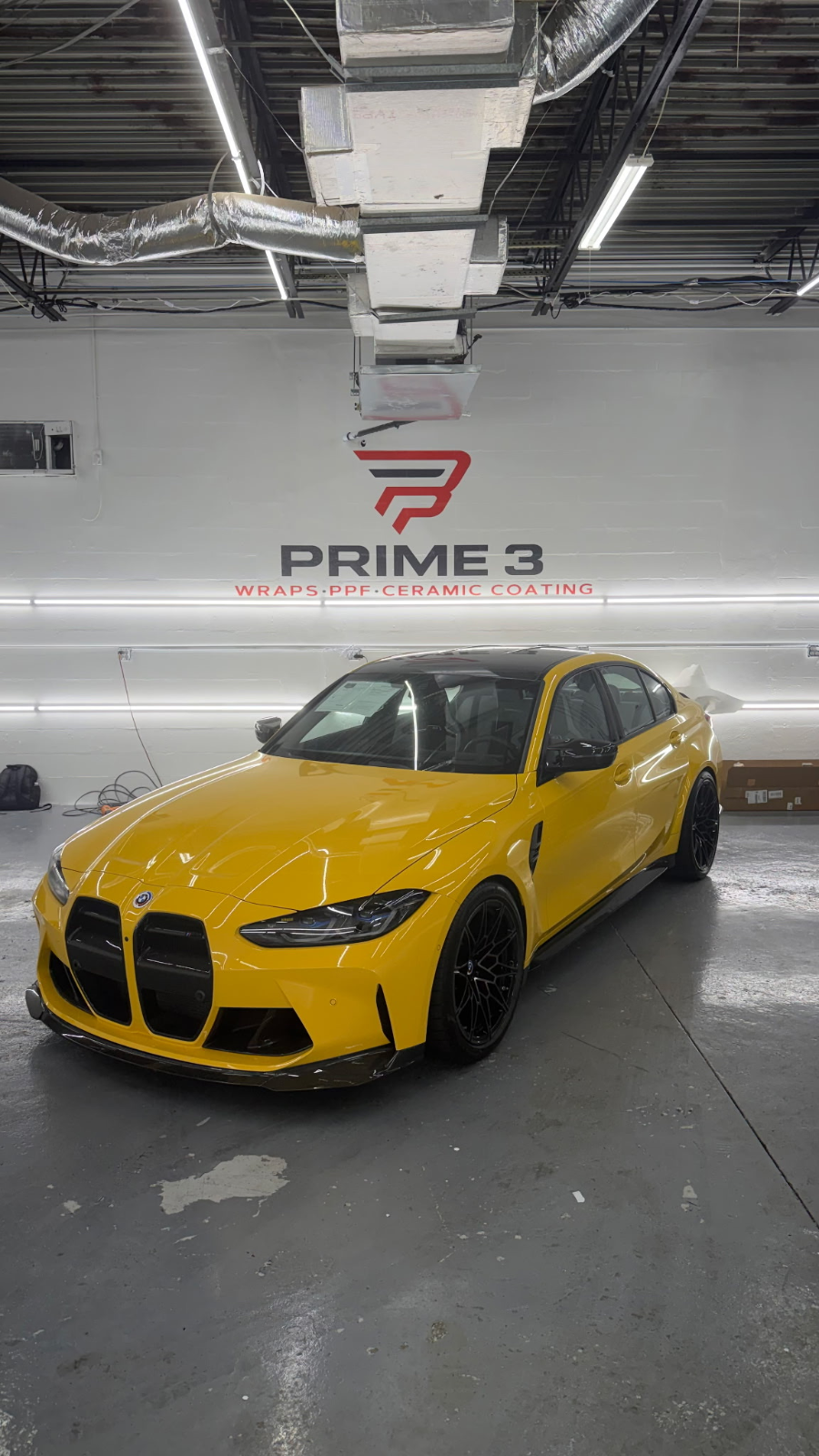
What a Failing Finish Looks Like Around Tampa
The signs show up slowly. The hood loses its gloss first, then the roof and trunk lid. A white or chalky residue comes off on your hand after a wash. Fine cracks appear in the clear coat, and panels that should match start looking like slightly different shades. On a car that already wears an older wrap, the film turns dull, shrinks back from the edges, or lifts at the corners.
This is normal in our climate. Tampa sits under strong sun most of the year, and UV rays break down both clear coat and vinyl over time. Add afternoon heat that bakes the panels, salty Gulf air drifting in from Clearwater and St. Petersburg, and daily highway miles, and a finish ages faster here than in most of the country.
The key thing to understand is that none of this means the car is dirty or neglected. The surface itself is wearing out. Once you can see it, waxing and polishing only slow the slide. That is usually the moment a full wrap enters the conversation, because the vinyl becomes the new outer layer and the tired paint underneath stops taking the beating.
Six Checks You Can Make in Your Own Driveway
Before calling anyone, spend ten minutes with the car parked in direct sunlight. These checks tell you where the finish actually stands.
- Walk the car in full sun and compare panels. A hood noticeably lighter than the doors means UV damage has set in.
- Drag a clean fingertip across the hood and roof. A rough, chalky feel means the clear coat is oxidizing.
- Spray water on the hood. If it sheets off flat instead of beading, the surface has lost its protection.
- Look closely at the edges of any existing wrap. Lifting film or a shrunken edge means the adhesive is failing.
- Check the clear coat for cloudy patches or fine cracks, especially on the hood, roof, and trunk lid.
- Step back and look for color differences between panels, which usually mark old touch-up work.
If two or more of these come up negative, the finish has moved past what polish can fix, and it is time to talk about a wrap.
The Paint Looks Dull No Matter How You Wash It
This is the sign most Tampa owners notice first. The car comes home from a wash and still looks tired. You polish it, and the shine fades again within weeks. What is happening is oxidation: the sun has thinned and roughened the clear coat until it scatters light instead of reflecting it.
A polish can cut back to fresh clear coat, but in Florida that repair is temporary. The same sun that burned the first layer will find the new one, and on horizontal panels the cycle repeats fast. At some point you are polishing a car two or three times a year just to keep it presentable.
A full vehicle wrap changes the equation. The vinyl becomes the surface the sun hits, so the appearance no longer depends on saving the original clear coat. Color change wraps are the usual route for a driver who wants the car to look new again, and the shop can go factory-original or something entirely different. The practical test is simple: if washing and waxing no longer produce the look you want, the finish itself, not your routine, is the problem.
The Clear Coat Is Peeling, Flaking, or Cracking
Clear coat failure looks different from ordinary fading. The paint develops cloudy patches, then the top layer starts to flake off in spots, often on the hood, roof, or trunk lid first. Some cars show fine spiderweb cracks across horizontal panels. Once it starts, it spreads, because the layer protecting the color coat underneath is gone.
This sign matters more than simple dullness, and here is why: vinyl wrap does not fix peeling paint, it shows it. Film laid over flaking clear coat will not bond properly, and every loose spot underneath telegraphs through the vinyl. A wrap installed over failing paint lifts early and looks poor within months.
That makes clear coat failure a point where the decision needs a professional set of eyes. A shop will check how far the failure has spread, whether the affected areas can be prepped, and whether a wrap is the right move at all for the panels involved. Doing nothing is the worst option, because exposed color coat fades and can start to deteriorate. If you see flakes on the ground after washing or cloudy rings on the hood, stop polishing and get the paint assessed before you plan any cosmetic work.
Your Existing Wrap Has Gone Chalky or Lifted at the Edges
Wraps do not last forever in Florida sun, and an aging wrap fails in recognizable ways. The color washes out and turns chalky. The film shrinks, pulling back from panel edges and exposing a line of bare paint around wheel arches and door bottoms. Corners lift. In bad cases the vinyl cracks along stress points, or the surface turns rough and stops washing clean.
When that happens, the wrap has stopped protecting anything. Sun and moisture reach the paint through every lifted edge, and the vehicle looks worse than it would have with plain worn paint.
The instinct some owners have, laying new vinyl over the old film, is the one move that guarantees trouble. A wrap over a wrap traps heat between the layers, bonds poorly, and typically fails within a short time. The old film has to come off completely, the adhesive residue has to be cleaned, and the paint underneath has to be checked before new material goes on. Removal and prep is shop work with the right solvents and heat control. If your current wrap is lifting, faded, or flaking, that is a full replacement conversation, not a patch job.
Touch-Up Spots and Mismatched Panels Keep Catching Your Eye
Park any car long enough in Tampa shopping centers and it collects door dings and bumper scuffs. The usual fix is spot painting, and it works until you look at the car in direct sunlight. Touch-up panels often sit a shade off from the original paint, because factory finish fades over years while fresh paint comes out of the gun matching day one. Now the car has a hood that is lighter than its fender, or a rear quarter panel that glows a slightly different white.
That mismatch is exactly the kind of thing a full wrap erases. Vinyl applies in one continuous color across every panel, so the whole car reads as a single uniform finish regardless of what the paint underneath is doing. Older repairs stop mattering. Faded doors and a repainted bumper become the same color again.
This sign is less about protection and more about presentation, but it is a legitimate reason drivers come in. If you have started parking far from store entrances to avoid new dings, or you keep steering conversation away from the car's patchwork look, a wrap that unifies the finish solves the problem in one pass instead of another round of blending.
Your Fleet Vehicles No Longer Match Each Other
For business owners, the sign shows up in the driveway at the start of the workday. One truck is two years old and still sharp. Another is five years in and the sun has faded its lettering to pastel. Parked side by side, they look like they belong to two different companies. Customers notice, even if nobody says anything.
A full wrap solves the consistency problem in a way paint never practically can. Every vehicle in the fleet gets the same color, the same finish, and the same branding laid over it, whether the panel underneath is fresh paint or a decade old. When a new van joins later, it gets wrapped to match instead of trying to blend in as bare metal.
Fleet owners around Tampa, Brandon, and Riverview also get the protection angle: the film takes the sun, highway sand, and washing abuse, and the paint under it holds its condition. That matters when trucks come off lease or head to resale. If your people are driving mismatched vehicles or your graphics have faded past readability, wrapping the fleet as a set is the fix, and it is worth a conversation with a shop that handles commercial work on a schedule.
When to call a pro
Some findings end the do-it-yourself conversation immediately. Peeling or flaking clear coat is one, because film will not bond to a failing surface and the prep required is beyond driveway work. An old wrap that is lifting, shrinking, or cracking is another, since complete removal and adhesive cleanup takes controlled heat and solvents. Deep dents, rust, or body damage also mean the panel needs correction before any vinyl goes over it.
Complex areas push the job into the shop too. Bumpers, mirrors, door handles, and deep channel recesses require disassembly and stretch techniques that separate a clean result from a bubbled one. And if the vehicle is a commercial unit that cannot sit out of service for days, timing the installation is its own reason to involve a shop.
That is where Prime 3 Wraps comes in. Our team handles full vehicle wraps for individual owners and fleet clients across Tampa and the surrounding area, starting with an honest look at the paint to confirm the car is a good candidate. If your driveway checks turned up peeling paint, a failing old wrap, or mismatched panels, call us at (813) 591-9779 or review our full vehicle wraps service to see what the process involves.
Ready to move forward? See our Full Vehicle Wraps service
Related guides
- How Much Does a Vehicle Wrap Cost in Tampa? (2026 Guide)
- Florida Vehicle Wrap Maintenance: Protecting Your Wrap from Sun, Heat & Salt
- How Much Does It Cost to Wrap a Car? 2026 Pricing Guide (Sedan, SUV, Truck)
- Tesla Wrap & PPF Cost in Tampa (Model 3, Y, S, X, Cybertruck) — 2026 Guide
- How Much Does Ceramic Coating Cost in Tampa? (2026 Pricing Guide)
- Best Window Tint Shop in Tampa: How to Choose (2026 Guide)
- Truck Wrap & PPF Cost in Tampa (F-150, RAM, Silverado, Tundra) — 2026 Guide
- How to Choose a Vehicle Wrap Shop in Tampa: 10 Questions to Ask (2026)
- How Much Does Window Tint Cost in Tampa? (2026 Prices)
- How Much Does PPF Cost in Tampa? (2026 Price Guide)
- Can You Wrap a Leased or Financed Car? (Florida Answer)
- How Long Does It Take to Wrap a Car? (Real Shop Timeline)
- Does a Car Wrap Damage Paint? What Really Happens at Removal
Written by the Prime 3 Wraps team.
8 Signs You Need a Full Vehicle Wrap in Tampa FAQs
Can you wrap a car with peeling clear coat or damaged paint?
No. Wrap vinyl is thin, so it shows whatever is underneath, and failing paint causes adhesion problems that lead to lifting. The surface needs to be sound and clean before installation. A shop should inspect the paint first and tell you whether prep work or correction is needed before a wrap goes on.
Will a full wrap hide scratches and swirl marks?
Light swirls and faint scuffs generally disappear under a full wrap, since the vinyl creates a fresh outer surface. Deep scratches, chips, or dents still show through the film, and dents can affect how the vinyl lies. Body damage should be corrected first, then the wrap applied over clean, smooth paint.
Does an old wrap have to come off before a new one goes on?
Yes. Wrapping over existing vinyl traps heat and moisture between the layers and causes both to fail early. The old film needs to be removed completely, any adhesive residue cleaned off, and the paint inspected before the new wrap is installed. That removal and prep step is shop work, not a driveway project.
Can a full wrap keep a small fleet looking consistent?
It can. When half a fleet is new and half is sun-faded, customers notice. A full wrap puts every vehicle in the same color and finish regardless of the paint underneath, and it shields the panels from further Florida sun. Fleet owners around Tampa Bay use this to keep their branding uniform.
Still have questions? Contact Us